
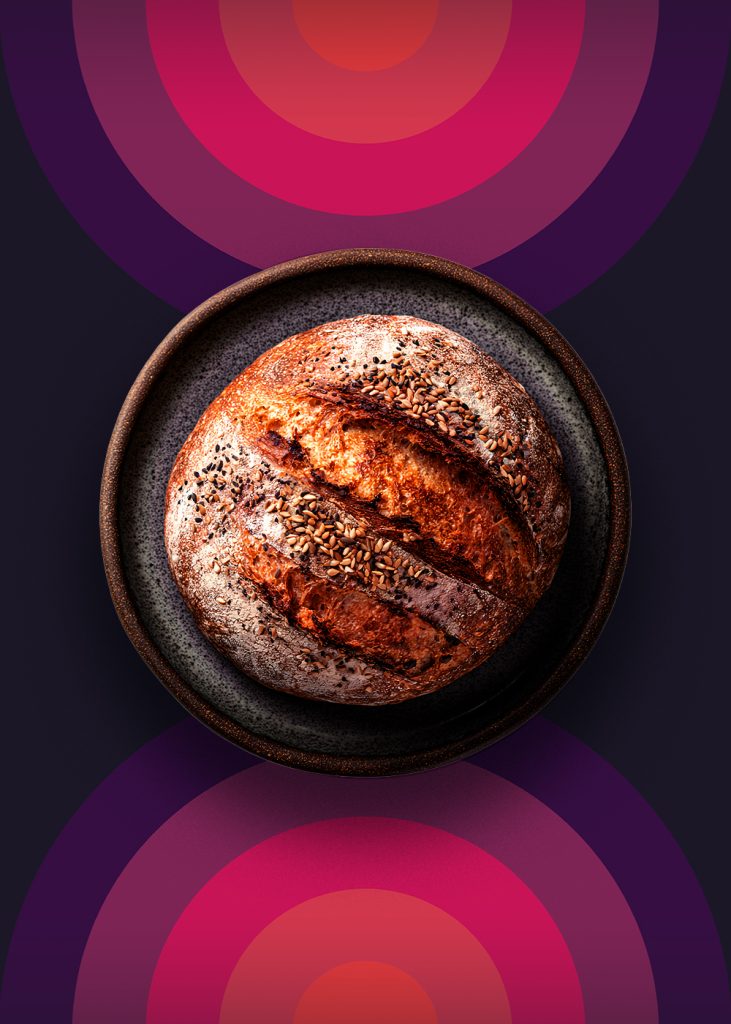
What does bread have to do with social strategy? More than I thought, as it turns out.
I absolutely love sourdough. Love it. Especially Jasons. I can easily get through a loaf a week and I never get bored of it. I literally wake up in the morning excited to pop a couple of slices in the toaster. It’s a bit of an office joke but it’s the truth, and I’m proud to be a sourdough superfan. Confessional over?
So when I read this on LinkedIn earlier this week, I was absolutely buzzing. Quoting a recently published article in the New York Times on food trends for 2026, it seems the scene is moving towards ‘quiet luxury’. That’s where diners’ priorities shift to high quality comfort foods that prioritise value, quality and reliability over anything else.
With sourdough being the epitome of this principle, such culinary ‘grandmacore’ is right up my street (oops confessional isn’t over).
Don’t get me wrong though, I am a stickler for a bargain – but when it comes to sourdough – I will not spare any expense (third confession, I guess).
Quiet luxury and marketing
Anyway, when I was thinking about social and what I see and think is going to be real focuses for 2026, my mind inevitably popped back to sourdough and quiet luxury, because I think we’re going to see the same sort of shift in marketing.
We all know that social media is completely saturated and there’s a lot of (going to be frank here), rubbish out there. AI generated, thoughtless, intent-less words and images that do nothing apart from, honestly, repeat the same thing.
Why posting less will matter more in 2026
I don’t think that it will stop, so what can we do about it looking forward? Well, post less for a start. Recent research and trend predictions suggest that for brands 2-3 posts a week is the sweet spot before the law of diminishing returns starts to apply, reader attention wanes and your message just becomes part of the background noise. Less really is more.
Intent rather than output
Closely linked to frequency and abundance then, is quality. Back to my bread again, would I rather have half a loaf of cornershop sliced white or two slices of sourdough? No contest (no shade thrown on sliced white, but it is my forever winner). Fewer posts but better quality. What does that mean? For me, the quality comes down to the intent of the post which has to be more than just appear on someone else’s feed.
Human stories still win
Fewer, more meaningful posts that have a clear intent rooted in a solid marketing strategy seem to me to be the way to go, both for our clients and for ourselves at Made.
And what of the posts themselves? Well, we all know that successful marketing centres on human stories and emotions, so I do think that as we move to less-but-better social posting strategy, it allows the space to focus more on producing posts that don’t ‘feel’ more authentic, they just are authentic.
Human-led storytelling with a strong emotional core naturally has greater resonance than anything that has been created with virality as a driving intent. Good posts resonate more and (might) become viral because of their human connection, so start there.
Depth vs attention span
One of the challenges we face as marketers – and it’s only going to get worse – is people’s dwindling attention spans. How do you create longer, higher-value posts and content when observation and research tells us that attention spans are becoming dramatically shorter. One study suggests that in the 20 years from 2004, the average attention span has dropped from 2.5 minutes to 47 seconds!
Whether it’s how a carousel is written and designed, longer form marketing collateral, or video content, this potentially contradictory position of offering true value but in bite-sized digestible packages is, for me, a goal for 2026.
Turning down the AI volume
One of the tools to help with this is, of course, AI. Sure, it bears more than its fair share of responsibility for the feed spamming mentioned above but, with the right prompts and responsible management, it can lighten the process load, as long as it’s supporting the process rather than replacing the thinking.
I think that taking advantage of it for research, structure and sense-checking is fair enough but the strategy that sits behind the content – the intent, the thesis, the emotional core and the polishing, they all need to be done by a human who understands the audience, the context and the nuance. Without this vital step, the content produced will, at best, be ‘fine’ but which nobody remembers five minutes later and is discarded on the big AI slop pile.
I’m hoping we see a move in this direction coupled with more careful judgement of what to post and what to leave – I think this sort of quiet luxury across social could be a real, positive differentiator for many brands. It’s just like how fewer but better quality ingredients and a more thoughtful process produce a better loaf.
If you’re looking for a social strategy that isn’t half-baked for 2026, chat with the team today and see how we can help.